What Is Commercial Health Insurance?
Commercial health insurance is health coverage provided by private, for-profit or non-profit insurance companies — as opposed to government-sponsored programs like Medicare, Medicaid, or CHIP. It is the most common form of health insurance in the United States, covering more than 180 million Americans.
The term “commercial” simply means the insurance is sold in the marketplace by private insurers. These plans can be purchased through an employer (employer-sponsored insurance), directly from an insurance company, through a state or federal marketplace (like HealthCare.gov), or through a broker or agent.
Commercial health insurance works on a risk-pooling model. A large group of people pay monthly premiums into a pool. When someone in the pool needs medical care, the insurance company pays part or all of the costs from that pool. This spreads the financial risk of illness or injury across many people, making individual healthcare costs more manageable.
Commercial Insurance vs. Government Insurance — Key Differences
Understanding what sets commercial insurance apart from government programs helps you make informed decisions about your coverage options.
| Feature | Commercial Health Insurance | Government Health Insurance |
|---|---|---|
| Who provides it | Private insurance companies | Federal or state government |
| Who it covers | Employees, individuals, families | Seniors (Medicare), low-income (Medicaid), veterans (VA) |
| How it is funded | Premiums paid by employers & individuals | Taxes and government funding |
| Eligibility | Available to most people who can pay premiums | Based on age, income, disability, or military status |
| Plan variety | Many plan types and customization options | Standardized programs with fixed benefits |
| Cost | Premiums, deductibles, copays, coinsurance | Minimal or no cost for eligible individuals |
| Network choice | Depends on plan type (PPO = broad, HMO = narrow) | Varies; Medicare has broad acceptance |
| Profit motive | Yes (most are for-profit) | No |
Types of Commercial Health Insurance Plans
Not all commercial health insurance plans are the same. The type of plan you choose affects your costs, the doctors you can see, and how your care is managed. Here are the main types:
1. Health Maintenance Organization (HMO)
HMO plans require you to choose a Primary Care Physician (PCP) who coordinates all of your healthcare. If you need to see a specialist, your PCP must provide a referral. HMOs only cover care from doctors and hospitals within their network (except in emergencies). Because of these restrictions, HMO plans typically have the lowest monthly premiums and out-of-pocket costs, making them a popular choice for people who want affordable, straightforward coverage.
2. Preferred Provider Organization (PPO)
PPO plans give you the most flexibility. You can see any doctor — including specialists — without a referral, and you can go to out-of-network providers (though at a higher cost). PPOs have a broad network of preferred providers, and using them keeps your costs lower. The trade-off is higher monthly premiums. PPOs are ideal for people who have established doctors they want to keep, travel frequently, or need access to a wide range of specialists.
3. Exclusive Provider Organization (EPO)
EPO plans combine features of both HMOs and PPOs. Like an HMO, you must stay within the network (except for emergencies). Like a PPO, you generally don’t need referrals to see specialists. EPOs tend to have moderate premiums — less than PPOs, more than HMOs — and work well for people who are comfortable with a network-based plan but don’t want the hassle of referrals.
4. Point of Service (POS)
POS plans are a hybrid of HMO and PPO. You have a PCP who provides referrals, but you also have the option to go out-of-network (at higher cost). POS plans are less common than HMOs and PPOs, but they offer a middle ground for people who want managed care with some flexibility to go outside the network when needed.
5. High Deductible Health Plan (HDHP)
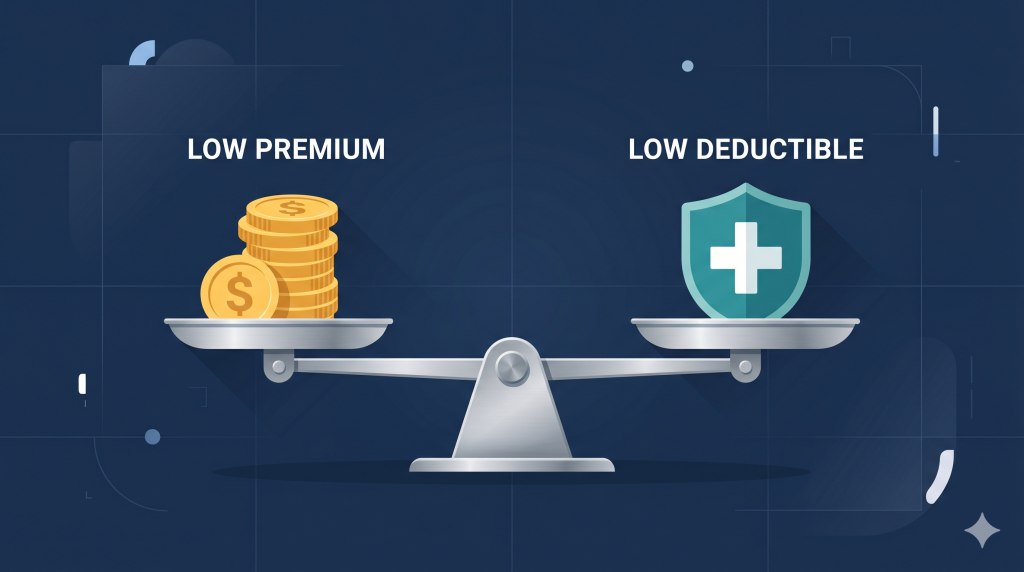
HDHPs have low monthly premiums but high deductibles — the amount you pay out of pocket before insurance kicks in. The IRS defines an HDHP as any plan with a deductible of at least $1,600 for individuals or $3,200 for families (2024 figures). HDHPs are often paired with a Health Savings Account (HSA), which lets you save pre-tax dollars for medical expenses. They are best suited for healthy individuals who rarely use medical services and want to save money on premiums while building an HSA.
How Does Commercial Health Insurance Work?
When you have commercial health insurance, there are several key financial terms and mechanisms you need to understand. These determine how much you ultimately pay for medical care.
Premium
The premium is the monthly amount you pay to keep your insurance active — regardless of whether you use any medical services that month. If you have employer-sponsored insurance, your employer typically pays a large portion of the premium and you pay the rest through payroll deductions.
Deductible
The deductible is the amount you must pay out of your own pocket each year before your insurance company starts sharing costs. For example, if your deductible is $1,500 and you have a $2,000 medical bill, you pay $1,500 and your insurer begins helping with the remaining $500. Preventive care services (like annual physicals and vaccines) are usually covered before you meet your deductible.
Copayment (Copay)
A copay is a flat fee you pay for a specific service — such as $25 for a doctor visit or $10 for a generic prescription. Copays typically apply after you’ve met your deductible, though some plans charge copays before the deductible is met for certain services.
Coinsurance
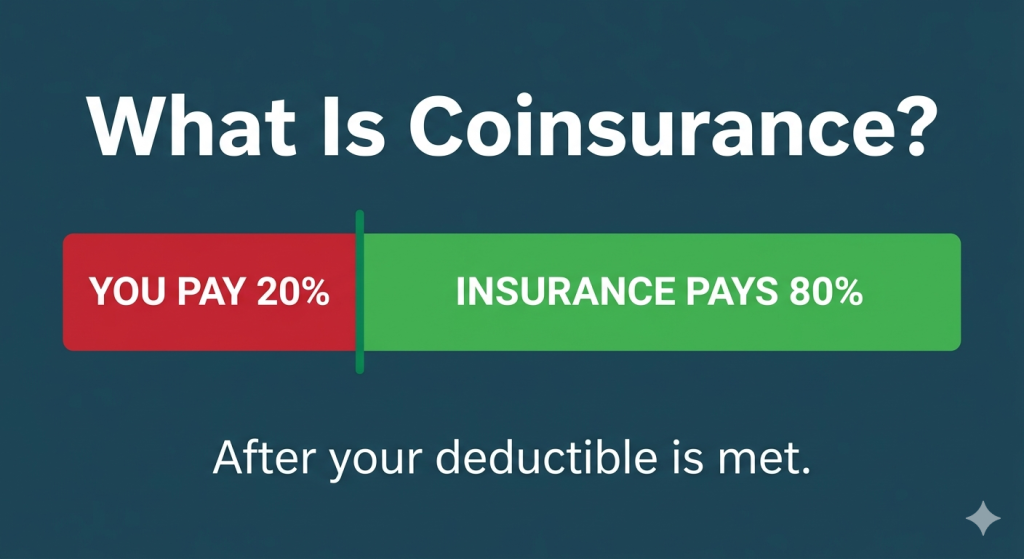
Coinsurance is the percentage of costs you share with your insurer after meeting your deductible. In an 80/20 coinsurance plan, the insurer pays 80% and you pay 20% of covered medical bills. If your covered medical bill is $1,000 (after deductible), you pay $200 and the insurer pays $800.
Out-of-Pocket Maximum
This is the most you will have to pay for covered services in a plan year. Once you reach this limit, your insurance pays 100% of all covered in-network costs for the rest of the year. For 2024, the ACA limits out-of-pocket maximums to $9,450 for individuals and $18,900 for families on marketplace plans.
What Does Commercial Health Insurance Cover?
Under the Affordable Care Act (ACA), all health insurance plans sold in the individual and small group markets — whether through a marketplace or directly — must cover ten categories of Essential Health Benefits (EHBs). These include:
Ambulatory Patient Services
Outpatient care you receive without being admitted to a hospital, including doctor office visits and outpatient surgery.
Emergency Services
Emergency room visits and emergency care, including situations where your life or health is in serious danger.
Hospitalization
Surgery, overnight stays, and inpatient care at a hospital or other facility.
Maternity & Newborn Care
Prenatal care, labor, delivery, and newborn care from birth.
Mental Health & Substance Use
Behavioral health treatment, counseling, and psychotherapy for mental health and substance use disorders.
Prescription Drugs
Coverage for medications prescribed by your doctor, typically organized into “tiers” based on cost.
Rehabilitative Services
Services to help you recover from injury, disability, or chronic conditions — including physical and occupational therapy.
Lab Services
Diagnostic tests and laboratory screenings to detect, diagnose, or monitor diseases and conditions.
Pediatric Services
Health services for children, including vision and dental care for those under 19.
Preventive & Wellness Services
Annual checkups, vaccinations, screenings (like mammograms and colonoscopies), and chronic disease management.
Beyond these required benefits, many commercial insurance plans also cover dental care for adults, vision care, chiropractic services, alternative medicine, and additional mental health sessions. The specific coverage depends on your plan and insurer.
How Much Does Commercial Health Insurance Cost?
The cost of commercial health insurance varies considerably based on many factors. Here is a breakdown of the key cost factors and typical ranges:
| Plan Type | Average Monthly Premium (Individual) | Typical Deductible | Flexibility | Best For |
|---|---|---|---|---|
| HMO | $400 – $550 | $500 – $1,500 | Low | Budget-conscious, consistent care |
| PPO | $550 – $800 | $500 – $2,000 | High | Maximum provider choice |
| EPO | $450 – $650 | $500 – $2,000 | Medium | Network care without referrals |
| POS | $450 – $700 | $500 – $2,000 | Medium | Managed care with some flexibility |
| HDHP | $300 – $500 | $1,600 – $5,000+ | Varies | Healthy individuals, HSA users |
Factors That Affect Your Premium
- Age: Older individuals pay higher premiums. Under ACA rules, the oldest enrollees can be charged up to 3x more than the youngest.
- Location: Premiums vary widely by state and even county, based on local healthcare costs and insurer competition.
- Plan tier: ACA marketplace plans are categorized as Bronze, Silver, Gold, or Platinum — each with different premium/deductible trade-offs.
- Tobacco use: Insurers can charge tobacco users up to 50% more in premiums.
- Plan type: HMOs are cheapest; PPOs most expensive.
- Employer contribution: If your employer offers insurance, they typically pay 70–80% of your premium, dramatically reducing your cost.
- Subsidies: People purchasing marketplace plans with incomes between 100–400% of the federal poverty level may qualify for ACA premium tax credits that reduce their monthly cost significantly.
How to Get Commercial Health Insurance
There are several ways to obtain commercial health insurance, depending on your employment status and personal circumstances:
-
Through your employer (Employer-Sponsored Insurance): The most common route. During open enrollment — typically once per year — employees select a plan from options offered by their employer. Employers typically contribute 70–80% of the premium cost. This is the most affordable option for most working adults.
-
Through a spouse’s or parent’s employer: If you don’t have insurance through your own job, you may be eligible to join a family member’s employer plan. Children can remain on a parent’s plan until age 26.
-
Through the ACA Marketplace (HealthCare.gov): Individuals and families without employer coverage can shop for plans during the annual Open Enrollment Period (November 1 – January 15 in most states). You may qualify for premium tax credits that lower your monthly cost. Special Enrollment Periods are available if you experience a qualifying life event (job loss, marriage, birth of a child).
-
Directly from an insurance company: You can purchase a plan directly from an insurer outside the ACA marketplace (called “off-exchange” plans). These plans don’t qualify for ACA subsidies, but they may offer more plan options or different pricing.
-
Through an insurance broker or agent: Licensed insurance brokers can help you compare plans from multiple insurers and find the best coverage for your needs and budget. Brokers are typically paid by the insurance company, so their services are free to you.
Pros and Cons of Commercial Health Insurance
✅ Advantages
- Wide variety of plan options to suit different needs and budgets
- Broad provider networks with many doctors and hospitals
- Comprehensive coverage including specialist care, prescriptions, and mental health
- Access to the latest medical treatments and technologies
- Employer contributions can dramatically reduce your premium cost
- Portable — some plans can go with you if you change jobs (COBRA)
- ACA subsidies available to lower-income individuals and families
- Coverage for pre-existing conditions is legally required
- Preventive care is covered at no cost (fully covered before deductible)
❌ Disadvantages
- Can be expensive, especially for those without employer contributions
- Complex terminology and rules can be confusing
- High deductibles and out-of-pocket costs in some plans
- Network restrictions can limit your choice of providers
- Premiums rise each year, often faster than wages
- Prior authorization required for some procedures and medications
- Claims can be denied, requiring time-consuming appeals
- Gaps in coverage may leave you with unexpected bills
Commercial Health Insurance for Small Businesses
Small business owners can purchase group health insurance for their employees through a private insurer or through the Small Business Health Options Program (SHOP) marketplace. Offering health insurance helps small businesses attract and retain employees, and employer contributions to premiums are generally tax-deductible.
Businesses with fewer than 25 full-time employees may also qualify for the Small Business Health Care Tax Credit if they purchase coverage through SHOP and meet income and contribution requirements. This credit can offset up to 50% of premium costs for eligible small businesses.
Group insurance plans typically have lower per-person premium costs than individual plans because the risk is spread across a larger pool of employees. Even businesses with just 2–10 employees can access group rates that are more affordable than individual market plans.
How to Choose the Right Commercial Health Insurance Plan
Choosing the right plan involves balancing your healthcare needs with your budget. Here is a practical framework:
Step 1: Assess Your Healthcare Needs
Think about how often you visit doctors, whether you take regular prescription medications, if you have chronic conditions, and whether you are planning any major medical events (surgery, pregnancy). If you are generally healthy and rarely need care, a low-premium HDHP may be ideal. If you have ongoing medical needs, a plan with lower deductibles and copays may save you money overall.
Step 2: Understand the Total Cost of Ownership
Don’t just look at the premium. Add up your premium, estimated deductible, copays, and coinsurance to calculate your expected total annual cost under different scenarios. A $500/month premium plan with low deductibles may cost less overall than a $350/month plan with a $5,000 deductible if you need frequent medical care.
Step 3: Check Your Doctors Are In-Network
Before enrolling, verify that your current doctors, specialists, and preferred hospitals are in the plan’s network. Going out of network can result in significantly higher costs or no coverage at all (in HMO and EPO plans).
Step 4: Review Drug Coverage
If you take prescription medications regularly, check the plan’s formulary (list of covered drugs). Medications are divided into tiers — generics, preferred brands, and non-preferred brands — with different cost-sharing at each tier. Make sure your medications are on the formulary at an affordable tier.
Step 5: Consider Additional Benefits
Look beyond the core medical coverage. Some plans include dental, vision, hearing, mental health, and telehealth services. Others offer wellness programs, gym membership discounts, and 24/7 nurse hotlines. These extras can add real value, especially for families.
Step 6: Understand Your Rights
Under the ACA, insurers cannot deny you coverage or charge you more because of pre-existing conditions. They must cover the ten Essential Health Benefits, provide a Summary of Benefits and Coverage (SBC) document, and follow strict rules about premium increases and coverage limits. Know your rights before you enroll.
Frequently Asked Questions (FAQs)
What is commercial health insurance?
Commercial health insurance is health coverage provided by private insurance companies rather than a government program. It can be obtained through an employer, purchased individually, or bought through a marketplace. It covers medical expenses in exchange for monthly premium payments.
What is the difference between commercial health insurance and Medicare?
Medicare is a federal government program primarily for people aged 65 and older, or those with qualifying disabilities. Commercial health insurance is provided by private companies and is available to most working-age individuals and their families. Medicare has standardized coverage while commercial plans vary widely in benefits, networks, and cost.
Is employer-sponsored health insurance commercial insurance?
Yes. Employer-sponsored health insurance is the most common form of commercial health insurance in the United States. The employer contracts with a private insurer to provide coverage to employees, typically contributing a large portion of the premium cost.
Can I have both commercial insurance and Medicare?
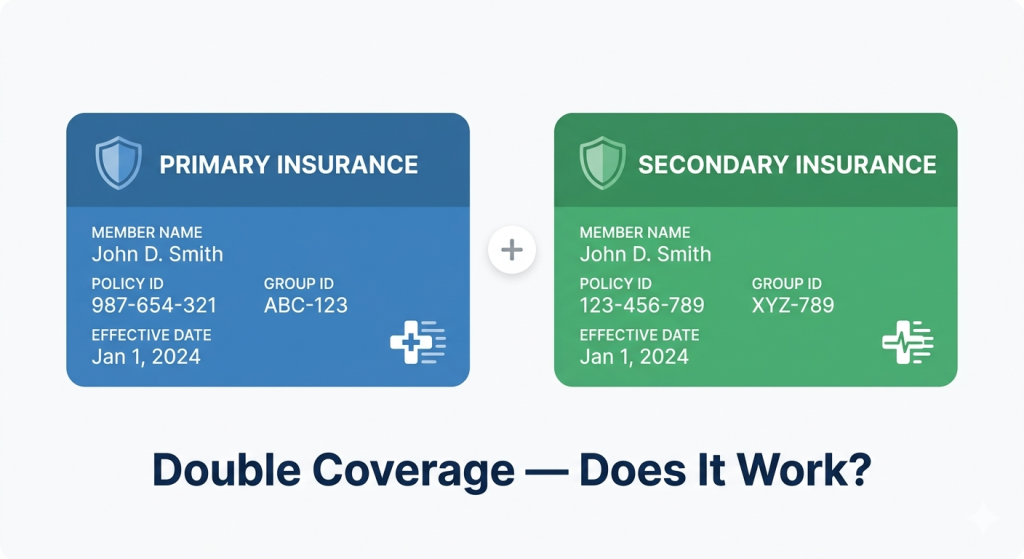
Yes, it is possible to have both. This is called “dual coverage.” For example, some Medicare beneficiaries also have employer-sponsored coverage or a Medicare Supplement (Medigap) plan. When you have two plans, one is primary and the other is secondary, and they coordinate to cover your costs.
What is not covered by commercial health insurance?
Most commercial plans do not cover cosmetic surgery (unless medically necessary), long-term care (nursing home care), dental care for adults (unless included as an add-on), vision care for adults (unless included), experimental treatments, and services deemed “not medically necessary.” Always read your plan’s Summary of Benefits and Coverage for exclusions.
What happens if I can’t afford commercial health insurance?
If you cannot afford commercial insurance, you may qualify for Medicaid (if your income is low enough), CHIP (for children), or ACA premium tax credits on the marketplace (for incomes between 100–400% of the federal poverty level). Starting in 2021, expanded subsidies have made marketplace plans significantly more affordable for many Americans.
How does commercial health insurance pay providers?
After you receive care, your provider submits a claim to your insurance company. The insurer reviews the claim against your policy terms, applies any deductible, copay, or coinsurance amounts, and pays the provider the negotiated rate for covered services. Your insurer has pre-negotiated lower rates with in-network providers, which is why using in-network care is always less expensive.
Can I be denied commercial health insurance?
Under the ACA, individual and small group market insurers cannot deny you coverage or charge you more because of pre-existing conditions. However, if you miss the Open Enrollment Period and don’t have a qualifying life event, you may have to wait until the next enrollment period to sign up for coverage.
Commercial Health Insurance and the Affordable Care Act (ACA)
The ACA, signed into law in 2010, fundamentally reshaped the commercial health insurance market. Key protections it introduced include:
- Pre-existing condition protection: Insurers cannot deny coverage or charge higher premiums based on health history.
- Essential health benefits: All ACA-compliant plans must cover ten categories of healthcare services.
- No lifetime or annual dollar limits: Insurers cannot cap how much they pay out over your lifetime or within a year for essential benefits.
- Dependent coverage until age 26: Young adults can stay on a parent’s plan until their 26th birthday.
- Preventive care with no cost sharing: Many preventive services (like vaccines and cancer screenings) are covered with no copay or deductible.
- Premium subsidies and cost-sharing reductions: Financial assistance is available for eligible lower-income individuals and families.
- Guaranteed issue: You cannot be turned down for coverage during open enrollment.
- Medical loss ratio: Insurers must spend at least 80–85% of premium dollars on actual medical care (not administrative costs or profit).
Conclusion
Commercial health insurance is the backbone of healthcare coverage for most working Americans. Whether you get it through your employer, purchase it on the marketplace, or buy it directly from an insurer, understanding how it works — the plan types, cost components, coverage rules, and your rights — empowers you to make smarter decisions about your health and finances.
The most important step is to compare your options carefully each year during open enrollment. Your healthcare needs, income, and family situation may change, and the best plan for you today might not be the best plan next year. Take time to review your Summary of Benefits and Coverage, check your network, and calculate your expected total costs before you commit.
Good health insurance isn’t just a financial product — it is a critical safety net that protects you and your family from the potentially devastating cost of unexpected illness or injury.