Should you aggressively pay off debt or build up savings first? It's one of the most Googled personal finance questions — and for good reason. The answer depends on your interest rates, your safety net, and one simple number that most people never think to compare. Let's figure it out.
The Real Question Behind the Question
When people ask “should I save money or pay off debt?” what they’re really asking is: where does my next dollar do the most good?
And that’s actually a very answerable question — once you know the numbers. Because at its core, this decision is a math problem dressed up in anxiety. The interest rate on your debt versus the return you’d earn on your savings. Whichever is higher wins.
That said, personal finance is also personal. Psychology, stress, and life circumstances matter too. So we’ll cover the math and the human side.
- 22% Average credit card APR in the US (2025)
- 4–5% High-yield savings account APY (2025–26)
- 7–10% Historic stock market annual return
- $1,000 Minimum emergency fund before debt focus
The Core Rule: Compare the Interest Rates
Here is the single most important principle in this entire debate:
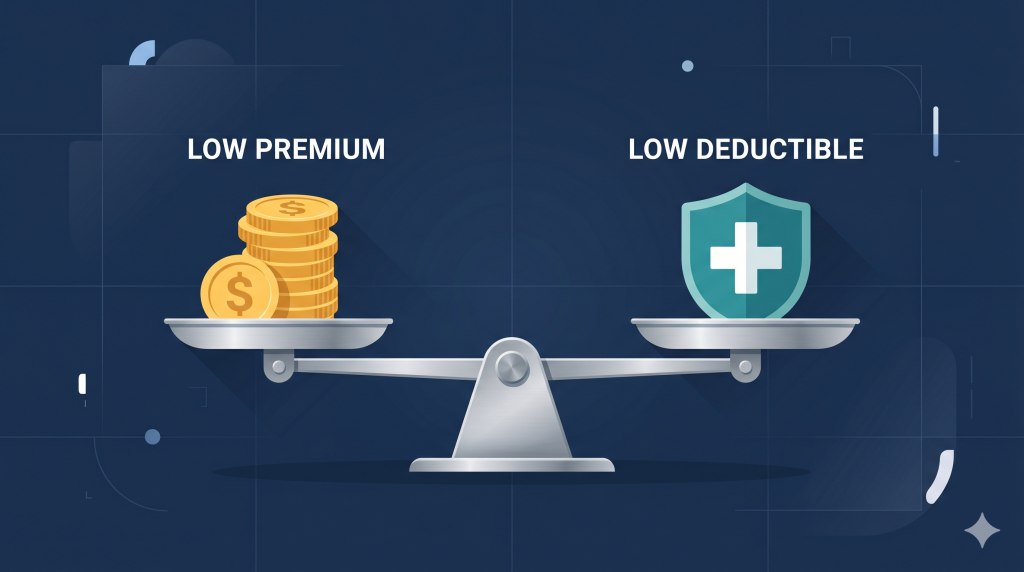
The interest rate rule: If your debt's interest rate is higher than what you'd earn by saving or investing that money — pay off the debt first. If it's lower, saving or investing may make more mathematical sense.
Let’s make this concrete. If you have credit card debt at 22% APR, paying it off is a guaranteed 22% return on your money. No savings account, no stock market index fund, no investment on Earth consistently delivers that. Paying off 22% debt is the best investment you can make.
On the other hand, if you have a student loan at 4% APR, the math shifts. A high-yield savings account at 4.5% or an index fund averaging 8–10% over time may outperform the benefit of paying that loan off early.
A Quick Guide to Every Type of Debt
Not all debt is created equal. Here’s how to think about the most common types:
| Debt type | Typical APR | Priority |
| Credit cards | 18–29% | Pay off aggressively — this is financial fire |
| Personal loans | 10–20% | Pay off before investing (usually) |
| Car loans | 6–10% | Gray zone — depends on your rate |
| Student loans | 4–8% | Often worth investing alongside, not instead |
| Mortgage | 3–7% | Invest instead — market likely beats this rate |
Invest instead — market likely beats this rate
But Wait — You Still Need Some Savings First
Here’s where the math alone can mislead you. Purely by the numbers, if you have 22% APR credit card debt, every dollar should go toward paying it off. But life doesn’t wait for your debt payoff plan.
What happens if you put every spare dollar toward debt — and then your car breaks down, or you face an unexpected medical bill? With no savings buffer, you have two bad options: go further into debt on a credit card, or take out a high-interest personal loan. You’ve undone your progress.
The starter emergency fund rule: Before aggressively paying off debt, save at least $1,000 in a liquid savings account as a basic buffer. This small cushion prevents minor emergencies from becoming major debt spirals.
Most financial experts — including Dave Ramsey, Suze Orman, and the team at NerdWallet — agree: a small emergency fund comes before aggressive debt payoff. The numbers don’t always account for reality.
The Three Scenarios: Which One Are You In
Pay off debt first
- You have high-interest debt (8%+)
- Debt causes significant stress
- You already have a $1,000 buffer
- No employer retirement match
- Credit card balances are growing
Save and invest first
- All debt is low-interest (under 6%)
- No emergency fund yet
- Employer offers a 401(k) match
- Debt is stable and manageable
- Long-term goals are a priority
Do both simultaneously (the split approach)
- Debt is in the 5–8% gray zone
- You have some emergency savings already
- Employer match is available (always capture this first)
- You want psychological wins on both fronts
- Income is stable and budget allows it
The Math That Changes Everything: A Real Example
Meet Alex. Alex has $500 extra each month and two options: put it toward a credit card at 21% APR, or put it into a high-yield savings account at 4.5%.
Alex’s Credit Card — $5,000 balance at 21% APR
- Monthly interest cost (if only minimum payments) ~$87/month
- Time to pay off with $500/month extra ~11 months
- Total interest saved by paying off early ~$620
- Equivalent guaranteed return rate 21%
Alternative: $500/month into savings at 4.5% APY for 11 months
- Total saved ~$5,500
- Interest earned ~$113
- Meanwhile, credit card interest paid ~$620
- Net result vs paying off debt $507 worse off
The verdict is clear for high-interest debt: paying it off is mathematically superior almost every time. Alex is better off by over $500 by clearing the card first.
When Saving Makes More Sense Than Paying Off Debt
The math flips when debt rates are low. Here are the situations where saving or investing beats aggressive debt payoff.
Your employer offers a 401(k) match
This is the one exception that nearly every financial expert agrees on: always contribute enough to capture your full employer match — even if you have debt. A 50–100% instant return from a match beats paying off a 6% loan every single time. Capture the match, then attack the debt.
Your debt rate is below 5–6%
A mortgage at 4%, a car loan at 5%, or a student loan at 3.5% — these are low enough that investing in a diversified index fund at a historical average of 7–10% per year makes mathematical sense. You’d earn more by investing than you’d save by paying down that cheap debt early.
You have no emergency fund at all
Even with high-interest debt, building at least a $1,000 emergency buffer first is critical. Without it, the next unexpected expense forces you back into debt — often at even higher rates. Save the buffer. Then attack the debt.
Smart move: Many financial planners recommend the "employer match first, then debt, then savings" order. It captures the best guaranteed return (the match), eliminates the biggest financial drag (high-interest debt), and then builds long-term wealth (savings and investing).
The Psychological Side Nobody Talks About
Here’s the thing about personal finance: the best plan is the one you’ll actually stick to. And math doesn’t account for stress.
Carrying debt is mentally exhausting for many people. The constant awareness of an outstanding balance — the interest ticking away — creates a low-level financial anxiety that affects decisions, sleep, and wellbeing. For some people, paying off debt aggressively (even when the math slightly favors investing) is worth it for the mental peace alone.
Personal finance is more personal than it is finance. — Morgan Housel, The Psychology of Money
If having $10,000 in savings while carrying $8,000 in debt makes you feel secure — even though mathematically you’d be better off using savings to clear the debt — that feeling has real value. You’re more likely to stay on track with a plan that doesn’t make you feel financially naked.
The best financial plan is the one that works for your actual life, not just a spreadsheet.
A Step-by-Step Decision Framework
Not sure where to start? Work through these steps in order:
- Save a $1,000 starter emergency fund: This comes before everything else. It’s your financial airbag. Even $500 is better than zero.
- Capture your employer’s 401(k) match: If your employer matches contributions, contribute at least enough to get the full match. This is a 50–100% return and beats paying off almost any debt.
- List all your debts and their interest rates: Write down every debt, its balance, and its APR. Sort from highest to lowest interest rate.
- Attack high-interest debt (8%+) aggressively: Use either the avalanche method (highest rate first — saves the most money) or the snowball method (smallest balance first — best for motivation). Both work.
- Build your full emergency fund (3–6 months): Once high-interest debt is cleared, grow your savings buffer before investing more.
- Invest for the long term: With debt under control and savings in place, direct extra income toward a Roth IRA, index funds, or other long-term investment vehicles.
Avalanche vs Snowball: Choosing a Debt Payoff Method
Once you’ve decided to pay off debt, you still need a strategy. Two methods dominate:
| Method | How it works | Best for | Saves the most money? |
|---|---|---|---|
| Avalanche | Pay minimum on all debts. Put extra money toward the highest-interest debt first. | People motivated by math and maximum savings | Yes |
| Snowball | Pay minimum on all debts. Put extra money toward the smallest balance first. | People who need quick wins to stay motivated | Not always, but close |
Research from Harvard Business Review found that the snowball method often leads to better real-world results because motivation and momentum matter more than pure math for most people. Both methods work — pick the one you’ll actually stick with.
Common Mistakes That Keep People Stuck
| Mistake | The real cost | Better approach |
|---|---|---|
| Saving aggressively while ignoring 20%+ credit card debt | You earn 4% while paying 22% — a net loss of 18% | Pay off credit cards first |
| Paying off a 3% mortgage early instead of investing | You “earn” 3% guaranteed while missing 7–10% market returns | Invest the difference |
| No emergency fund while in debt payoff mode | One unexpected expense sends you back into debt | Save $1,000 buffer first |
| Skipping the employer 401(k) match to pay debt | Giving up a guaranteed 50–100% return | Always capture the match |
| Trying to do everything at once with no plan | Spreading money too thin — debt stays high, savings stay low | Follow the priority order above |
The Simple Answer for Most People
If you want one clear, practical answer that works for the majority of situations — here it is:
The priority order: Save $1,000 buffer → capture employer match → pay off all debt above 7% → build 3–6 month emergency fund → invest for the long term. Follow this sequence and you'll be in better financial shape than most people within a few years.
The details of your specific situation — your income, debt types, job stability, and goals — will fine-tune this order. But for most people, this sequence works remarkably well.
Debt keeps you anchored to the past. Savings and investing build your future. The goal is to deal with the anchor as fast as possible — without leaving yourself exposed to the next emergency — so you can focus all your energy on building forward.
You don’t need to be perfect. You just need a plan and the discipline to follow it. Start today, adjust as you go, and give yourself credit for every step forward.
Found this useful?
Share this article with someone drowning in debt decisions — or ask a follow-up question below. Every financial situation is different and worth exploring.
Sources & References:
CFPB — Credit Card Interest Rate Data | Harvard Business Review — Debt Payoff Strategy Research | Morgan Housel, The Psychology of Money (2020) | IRS — 401(k) Plan Information | NerdWallet — Debt vs Investing Guidance