Is It Legal to Have Two Term Life Insurance Policies?
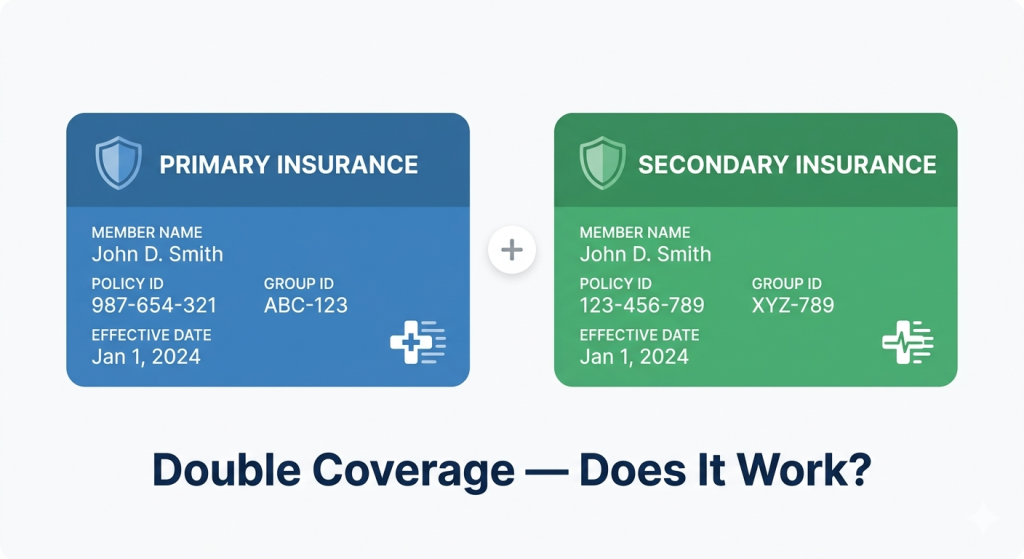
Absolutely. Owning multiple life insurance policies — whether two term policies, a combination of term and whole life, or policies from different companies — is completely legal in every U.S. state. There is no federal or state law that restricts you to a single policy.
The concept that governs this is called insurable interest. This principle simply means that life insurance must be purchased for legitimate financial protection purposes — not as a way to profit from someone’s death. As long as the total coverage you are requesting is financially justified by your income, debts, and dependents, insurers are generally willing to approve multiple policies.
In practice, millions of Americans carry more than one life insurance policy at the same time. This includes people who have a policy through their employer’s group benefits and also a private individual policy, as well as people who deliberately purchase multiple policies as part of a coverage strategy.
Will Both Policies Pay Out When You Die?
Yes — and this is one of the most important things to understand. Life insurance is not like health insurance. With health insurance, multiple policies coordinate benefits so you cannot collect more than 100% of a medical bill. Life insurance works differently: if you hold two valid, active term life insurance policies at the time of your death, both policies will pay their full death benefit to your beneficiaries.
For example, if you have a $500,000 term policy with Company A and a $300,000 term policy with Company B, and both are active when you die, your beneficiaries will receive:
- $500,000 from Company A
- $300,000 from Company B
- $800,000 total — tax-free
There is no coordination of benefits, no offset, and no deduction. Each policy is an independent contract, and each insurer is independently obligated to pay its full promised death benefit when a valid claim is filed.
Do You Have to Tell Insurers About Your Other Policies?
Yes — and this is non-negotiable. Every life insurance application includes questions about your existing life insurance coverage. You will be asked:
- Do you currently have any life insurance coverage in force?
- Have you applied for any life insurance in the past 12 months?
- What is the total face amount of all existing policies?
- Is this new coverage intended to replace any existing coverage?
You must answer these questions truthfully. Failing to disclose existing policies is considered material misrepresentation, which is a form of insurance fraud. If you misrepresent your existing coverage and later die, the insurer has grounds to deny your beneficiary’s claim — even if the cause of death had nothing to do with the misrepresentation.
The good news is that disclosing your other policies does not automatically disqualify you. Insurers use this information not to reject you, but to verify that the total coverage you are seeking is reasonable relative to your financial situation. As long as your combined coverage falls within their guidelines, they will proceed with underwriting normally.
How Much Total Life Insurance Can You Have?
While there is no legal cap on the number of policies you can own, insurers do apply financial underwriting guidelines to limit total coverage. Their goal is to ensure that your total death benefit across all policies does not exceed a reasonable estimate of your economic value — the financial loss your dependents would experience if you were to die.
The most common guideline is a multiple of your annual income, which decreases as you get older:
| Age Range | Typical Max Total Coverage | Example (Income: $80,000/yr) |
|---|---|---|
| Under 40 | 25–30× annual income | Up to $2,000,000–$2,400,000 |
| 40–50 | 20–25× annual income | Up to $1,600,000–$2,000,000 |
| 50–60 | 15–20× annual income | Up to $1,200,000–$1,600,000 |
| 60–65 | 10–15× annual income | Up to $800,000–$1,200,000 |
| 65+ | 5–10× annual income | Up to $400,000–$800,000 |
These are approximate guidelines — different insurers have different formulas. Some also factor in your net worth, outstanding debts, mortgage balance, business interests, and anticipated future earnings. A high-net-worth individual or a business owner with significant key-person insurance needs may qualify for coverage well above these standard income multiples.
When you apply for a second policy, the insurer will subtract your existing coverage from their total allowable amount to determine how much additional coverage they will approve. For example: if your income-based maximum is $2,000,000 and you already have a $500,000 policy, an insurer may approve up to $1,500,000 in additional coverage.
Why Do People Have Two Term Life Insurance Policies?
There are several very legitimate and financially smart reasons why someone might want to carry two separate term life insurance policies simultaneously. Here are the most common scenarios:
The Policy Laddering Strategy — Explained in Detail
Policy laddering is one of the most financially efficient strategies in life insurance planning, and it almost always involves holding two or more policies simultaneously. The core idea is elegant: buy multiple policies with different term lengths so your total coverage decreases in sync with your shrinking financial obligations over time.
Here is a concrete example. Imagine you are 35 years old, you have a $400,000 mortgage, two young children, and you earn $70,000 per year. A financial planner might recommend a total coverage need of $1,000,000. Your two biggest financial obligations are:
- Your mortgage — which will be paid off in approximately 20 years
- Income replacement for your children — who will be financially independent in approximately 25–30 years
Single Policy Approach (No Laddering)
You buy one $1,000,000 30-year term policy. Monthly premium for a healthy 35-year-old male: approximately $75–$90/month. You pay this for all 30 years regardless of the fact that your mortgage is paid off after year 20 and your children are independent after year 25.
Laddered Two-Policy Approach
Instead, you buy:
- Policy 1: $600,000 / 20-year term — covers mortgage payoff period and heaviest family dependency years. Cost: ~$35/month
- Policy 2: $400,000 / 30-year term — provides baseline protection through your full working life. Cost: ~$30/month
- Total combined cost years 1–20: ~$65/month for $1,000,000 in coverage
- Total combined cost years 21–30: ~$30/month for $400,000 in coverage (Policy 1 has expired)
Laddering provides maximum coverage when your financial obligations are highest, then reduces naturally as obligations shrink — at a lower total cost than one large 30-year policy.
Why Laddering Saves Money
The savings with laddering come from a simple principle: shorter-term policies cost less per month than longer-term policies. By “stacking” a shorter policy on top of a base longer policy, you get maximum coverage in the early years at a blended rate that is cheaper than buying one large long-term policy outright.
Over 30 years, a laddered two-policy approach can save $3,000 to $10,000 or more in total premiums compared to a single equivalent policy, depending on the coverage amounts and ages involved.
| Approach | Monthly Cost (Yrs 1–20) | Monthly Cost (Yrs 21–30) | Total 30-Year Cost | Total Coverage |
|---|---|---|---|---|
| Single $1M / 30-yr policy | ~$82/mo | ~$82/mo | ~$29,520 | $1,000,000 (all 30 yrs) |
| Laddered two policies | ~$65/mo | ~$30/mo | ~$18,600 | $1M (yrs 1–20) then $400K (yrs 21–30) |
| Estimated savings with laddering: ~$10,920 over 30 years | ||||
Sample rates for a healthy 35-year-old male in Preferred health class. Actual rates vary by insurer.
Group Life Insurance + Private Policy: The Most Common Dual-Policy Scenario
The most widespread situation where someone ends up with two life insurance policies is when they have group coverage through their employer and an individual private policy. Understanding the important differences between these two types of coverage clarifies why having both is often the right move.
Employer Group Life Insurance — What It Is and What It Is Not
Most employers offer group term life insurance as part of their benefits package, often at no cost to the employee for a basic amount (typically one to two times your annual salary). For a $60,000 per year employee, that means $60,000–$120,000 in coverage — a meaningful start, but rarely sufficient for a family with a mortgage and dependents.
The important limitations of employer-provided group coverage are:
- It is tied to your job. If you leave, get laid off, or your employer cancels the benefit, you lose the coverage. You may have a brief conversion window, but it is often expensive and limited.
- The coverage amount is usually capped low. Basic group coverage rarely exceeds two times annual salary without supplemental elections, which can be costly and also employer-dependent.
- No portability. Unlike a private policy you own, employer group coverage cannot move with you from job to job.
- Coverage ends at retirement. Most group policies terminate when you leave the workforce — precisely when some people still need coverage.
Why Adding a Private Policy Makes Sense
An individual term life policy solves every one of the above limitations. It is yours regardless of your employment status, it covers the amount you choose, and the premium is locked for the full term. For most families, the ideal approach is to treat employer coverage as a supplemental bonus and build their actual financial protection plan around a private individual policy they fully control.
Adding a Second Policy After a Major Life Event
People’s lives change — and their life insurance needs change with them. Rather than canceling an existing policy (which means losing the favorable rates locked in when you were younger and healthier), many people simply add a second policy to cover the new, increased need.
Common life events that trigger a second policy purchase include:
- Having a child: A new dependent significantly increases the financial consequence of your death. Many parents add a second policy when their first or second child is born.
- Buying a home: A large mortgage creates a new financial obligation that existing coverage may not fully address. A second policy targeted specifically at the mortgage balance is a common solution.
- Starting a business: Business owners often need a key-person insurance policy to protect the business alongside their personal family coverage.
- Spouse returns to work: A stay-at-home parent who re-enters the workforce may now need their own individual policy in addition to a spouse’s policy that previously covered the family’s needs.
- Income significantly increases: A major salary jump means your family’s standard of living — and therefore the insurance coverage needed to replace it — has grown.
Can You Have Two Policies From Different Companies?
Yes, completely. Having policies from two different insurers is perfectly acceptable and is actually a common approach for several reasons:
- Each insurer has pricing sweet spots. One company may offer the best rates for 20-year term policies while another is most competitive for 30-year terms. Splitting your coverage between two companies lets you optimize pricing for each component of your overall coverage strategy.
- Different underwriting specialties. Some insurers are more lenient with specific health conditions. If you have a condition that results in a rated policy at Company A, Company B may assess it more favorably.
- Reducing single-company dependency. While all major insurers are financially strong, some buyers simply prefer diversifying across two A-rated companies rather than relying on one for 30+ years of coverage.
There is no requirement — legal or otherwise — that you keep all of your life insurance with a single carrier.
Potential Downsides of Having Two Policies
While having two term life insurance policies is a legitimate and often smart strategy, there are some practical considerations to keep in mind:
Managing Two Sets of Premiums
With two policies comes two monthly (or annual) premium payments, two separate billing relationships, and two renewal or lapse monitoring obligations. Missing a premium payment can cause a policy to lapse, ending coverage. Setting up automatic payments for both policies eliminates most of this administrative risk.
Two Separate Applications and Underwriting Processes
Each policy requires its own full application and underwriting process. That means two sets of health questions, potentially two medical exams, and two waiting periods for decisions. If your health has changed since your first policy, the second underwriting process will reflect your current health status.
Total Coverage Limits May Be Reached
As discussed earlier, insurers cap total allowable coverage based on your income. If your first policy already covers a large multiple of your income, a second insurer may offer you a reduced coverage amount or decline the application based on financial justification. This is more of a concern for high-coverage amounts and less relevant for typical middle-income coverage needs.
It May Not Always Be Necessary
Sometimes the simplest answer is the right one: if you can get all the coverage you need from a single policy at a price you are comfortable with, adding a second policy introduces unnecessary complexity. Two policies make the most sense when there is a clear strategic reason — laddering, life event coverage gap, employer policy supplement — rather than just “more coverage for the sake of it.”
Practical Tips for Managing Two Term Life Insurance Policies
- Keep all policy documents in one secure location — a fireproof safe, a digital folder, or a secure online document vault — so beneficiaries can easily find them.
- Make sure beneficiary designations are up to date on both policies. Beneficiary designations supersede your will, so an outdated name on one policy can create complications.
- Set up autopay for both premiums to eliminate any risk of accidentally lapsing a policy due to a missed payment.
- Tell your beneficiaries about all policies. Include the insurer name, policy number, and contact number. An estimated $1 billion in life insurance goes unclaimed every year because survivors simply do not know a policy exists.
- Review both policies periodically. As your financial situation changes, you may find that one policy can be reduced, dropped, or replaced — or that you need additional coverage.
- Work with an independent broker who can compare multiple companies and help you structure your total coverage efficiently across multiple policies.
Frequently Asked Questions
Key Takeaways
Owning two term life insurance policies at the same time is legal, common, and often financially smart. Here is what to remember:
- There is no law limiting the number of life insurance policies you can own.
- Both policies will pay in full if you die while both are active — there is no coordination of benefits like with health insurance.
- You must disclose existing coverage on any new application — misrepresentation can lead to claim denial.
- Total coverage is limited by financial underwriting guidelines — roughly 20–30 times annual income for people under 40.
- Policy laddering — buying two policies with different term lengths — is one of the smartest ways to structure life insurance, saving thousands while keeping coverage aligned with your actual needs.
- The most common dual-policy scenario is employer group coverage plus a private individual policy.
- You can hold policies from two different insurance companies simultaneously — there is no rule requiring single-insurer coverage.
- Make sure beneficiaries know about all of your policies and can locate the policy documents.