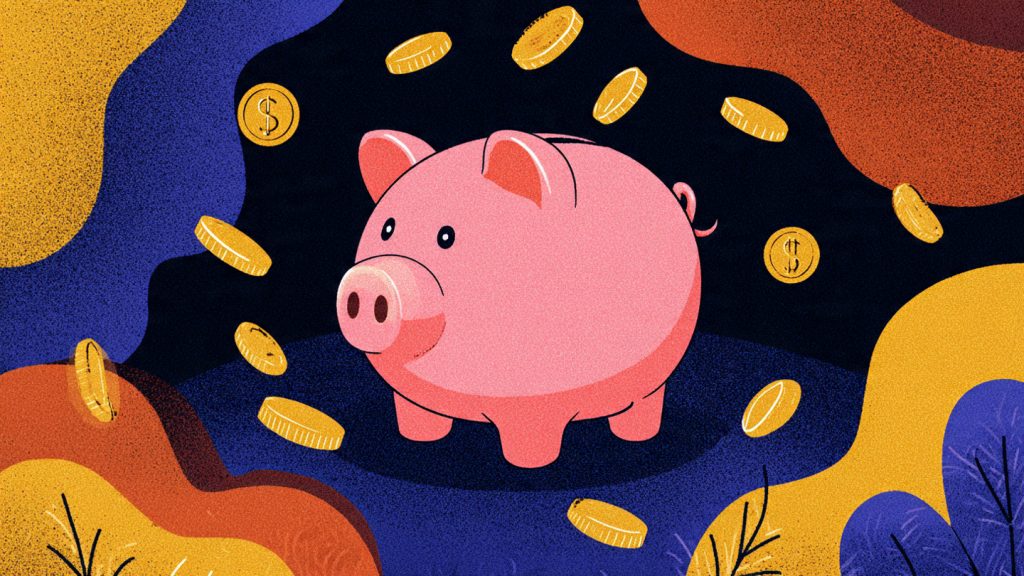
It is one of the oldest money questions in the book — and it still trips people up every single day. The truth is that neither saving nor spending is always the right answer. The smart move is knowing when to do which.
Let’s be real for a second. We all have that one friend who saves every dollar like the economy is about to collapse — and another who spends like a lottery winner on a Monday. Neither extreme is a great financial strategy. The answer almost always lives somewhere in the middle, and this article will help you find exactly where that is for your situation.
Why This Question Matters More Than You Think
Money decisions compound over time. A small spending habit today can become a huge missed opportunity in 20 years. On the flip side, saving too aggressively without purpose can stall your life, your experiences, and sometimes even your career.
- 57% of Americans can’t cover a $1,000 emergency (Bankrate, 2026)
- $0 saved by 1 in 4 working-age adults for retirement (Federal Reserve)
- 3–6x monthly expenses is the recommended emergency fund size (CFP standard)
These numbers are not meant to scare you. They are meant to show that without a clear framework, most people default to spending first and saving whatever is left. Spoiler alert: whatever is left is usually nothing.
When You Should Prioritize Saving
There are specific life situations where saving is clearly the smarter move. Here is when you need to put saving first, without question.
You do not have an emergency fund
Before you think about anything else, you need a financial safety net. An emergency fund covers unexpected job loss, medical bills, or car repairs without forcing you into debt. Financial planners consistently recommend three to six months of living expenses saved in a liquid, accessible account.
Tip: Open a high-yield savings account (HYSA) — many offer 4–5% APY, which means your emergency fund actually grows while it sits there.
You have high-interest debt
If you are carrying credit card debt at 20–29% interest, no savings account or investment in the world will outperform that drain. In this case, “saving” smartly means aggressively paying off that debt first. Once it is gone, you free up real money to build with.
You have a big financial goal on the horizon
Planning to buy a home? Starting a business? Getting married? These are events that require capital, and that capital takes time to accumulate. Saving now is literally an investment in a future version of your life that you actually want to live.
You have not started saving for retirement
Time is the single most powerful ingredient in retirement savings because of compound interest. According to Fidelity Investments, saving 15% of your income for retirement starting in your 20s gives you a dramatically better outcome than saving 25% starting in your 40s. The math is not close.
If your employer offers a 401(k) match, contribute at least enough to get the full match. Not doing so is the financial equivalent of turning down free money.
When Spending Is Actually the Smarter Move
Before you feel guilty about that coffee or the vacation you booked, know this: spending is not the enemy. Mindless spending is. There are moments when deliberate, intentional spending creates enormous value.
Investing in your skills and career
A certification, online course, or professional training can multiply your income for decades. Spending $500 on a skill that lands you a $10,000 raise is not an expense — it is a 2,000% return on investment. Spending here is not a cost, it is capital allocation.
Your health and wellbeing
Preventive health costs far less than reactive health costs. A gym membership, quality sleep, good food, and mental health support are not luxuries — they are infrastructure for a productive life. The CDC data consistently shows that poor health outcomes are heavily linked to financial strain, creating a cycle that is hard to break once it starts.
Experiences that genuinely matter to you
Research from Cornell University’s Dr. Thomas Gilovich shows that people derive more lasting satisfaction from experiences than from material purchases. A memorable trip or a meaningful shared experience with family contributes to long-term happiness in ways that a new gadget simply does not.
Key insight: Spend on things that align with your values. Spending that drifts from your values is the kind that leads to regret — not the kind that leads to a full life.
When inflation is working against you
In high-inflation periods, sitting on too much cash in a low-yield account means your purchasing power shrinks every month. In these environments, spending on durable goods or investing in inflation-resistant assets can actually be the smarter financial move.
The 50/30/20 Rule — A Practical Starting Framework
If you are looking for one simple framework to balance saving and spending, the 50/30/20 rule (popularized by Senator Elizabeth Warren in her book “All Your Worth”) is a solid starting point for most people.
- 50% Needs — rent, food, utilities, transport.
- 30% Wants — dining, entertainment, subscriptions.
- 20% Savings — emergency fund, retirement, goals
This rule is not rigid. If you live in a high cost-of-living city, your “needs” bucket might take 60–65% of your income. Adjust from there. The goal is awareness, not perfection.
Note: This framework assumes a stable income. Freelancers and gig workers should build a larger emergency fund and apply variable budgeting principles instead.
Step-by-Step Guide to Deciding Save or Spend Right Now
Use this quick decision process when you are standing at the crossroads of a financial choice.
- Check your emergency fund status. If you have less than one month of expenses saved, that takes priority over nearly everything else.
- Identify if you carry high-interest debt above 10% APR. If yes, redirect would-be spending to paying it down.
- Ask yourself: does this purchase align with a stated goal or value? If it does not, wait 48 hours before buying. Most impulse purchases evaporate in that window.
- Calculate the actual cost in hours of your life. Divide the price by your hourly take-home pay. A $300 item at $25/hour = 12 hours of your time. Is it worth it?
- For larger spending decisions, check whether your future-self would approve. If you picture yourself six months from now and the purchase still makes sense, it probably does.
- Automate the savings first. Transfer your savings target the day your paycheck hits. Spend whatever remains. This is called “paying yourself first” and it is remarkably effective.
Common Mistakes People Make With This Decision
Saving without a purpose
Saving money with no clear goal is less motivating and often leads to raiding the savings for unplanned spending. Give every dollar a name. “House down payment fund.” “Emergency fund.” “Trip to Japan 2027.” Named goals stick.
Spending to feel better in the short term
Retail therapy is real but it is also a leak. Research published in the Journal of Consumer Psychology confirms that buying things to regulate negative emotions is a short-lived fix that often leads to regret and additional financial stress. If you find yourself shopping when stressed, it is worth identifying that pattern and building a healthier replacement habit.
Waiting for the perfect time to start saving
There is no perfect time. Start with whatever you can — even $25 a month is a start. The Vanguard Group consistently shows that investor behavior (starting early, staying consistent) matters more than the exact amount saved per month, especially in the early years.
Ignoring lifestyle inflation
When you get a raise, it is tempting to upgrade your lifestyle proportionally. Known as “lifestyle creep,” this pattern silently erases income gains. A smarter rule: bank at least half of every raise before your lifestyle adjusts to the new income level.
What Financial Experts Actually Recommend
The broad financial planning consensus (from organizations like the CFP Board, FINRA, and the Consumer Financial Protection Bureau) converges on a few core principles:
- Build a 3–6 month emergency fund before investing or aggressive spending
- Contribute enough to retirement accounts to capture any employer match
- Pay off high-interest debt before prioritizing investment
- Budget deliberately, not reactively — decide in advance, not in the moment
- Revisit your budget every 3–6 months as income and expenses change
Sources: Consumer Financial Protection Bureau (CFPB), CFP Board, Vanguard Group Investor Research, Bankrate 2024 Emergency Fund Survey, Federal Reserve Report on the Economic Wellbeing of U.S. Households
The Bottom Line — It Is Not Save vs. Spend, It Is Both
The most financially healthy people do not choose between saving and spending. They do both — deliberately, in proportions that reflect their goals and their values. They spend generously on what matters to them and say no without guilt to what does not.
If you take one thing from this article, let it be this: automate your savings, give your spending intention, and stop treating the two as enemies. They are tools. Used well, together, they build a life that is both financially secure and genuinely enjoyable.
Money is not the destination. It is the vehicle. The question is not just whether to save or spend — it is where you are actually trying to go.
Found this helpful?
Share this article with someone who is figuring out their money, or drop your thoughts in the comments below. What is your biggest challenge with saving vs. spending right now?
Sources: Consumer Financial Protection Bureau (CFPB), CFP Board, Vanguard Group Investor Research, Bankrate 2026 Emergency Fund Survey, Federal Reserve Report on the Economic Wellbeing of U.S. Households