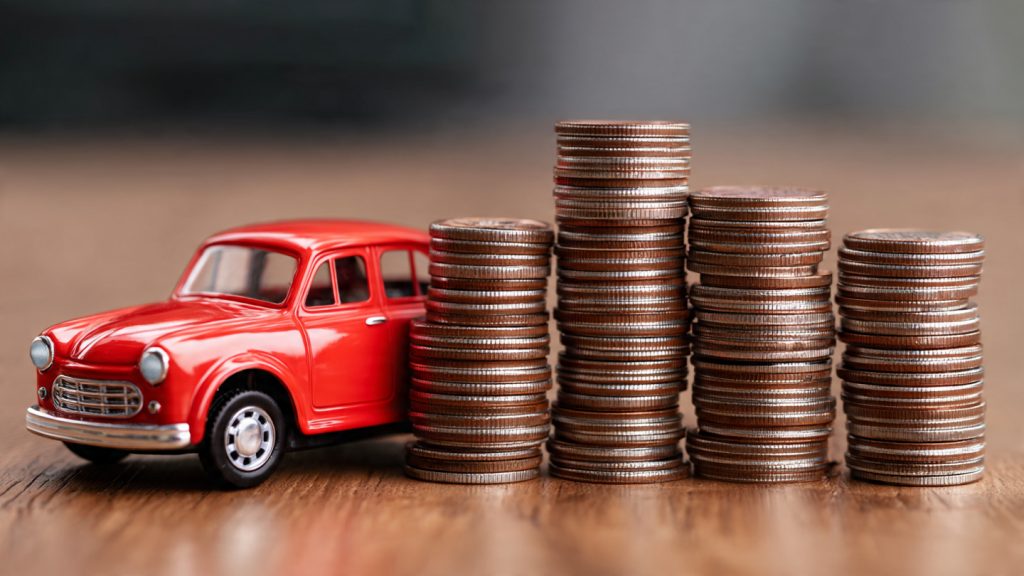
Is flipping a coin really 50/50? The answer might surprise you. While coin toss probability has long been considered the gold standard for fair decision-making, recent scientific research reveals that coin flips aren’t as random as we once believed.
A groundbreaking study analyzing 350,757 coin tosses found that coins are slightly more likely to land on the same side they started, with a 50.8% bias toward the starting position. This discovery challenges decades of assumptions about coin flip fairness and has significant implications for gambling, sports, and everyday decision-making scenarios.
The Mathematical Theory Behind Coin Flip Probability
Understanding the mathematical foundation behind coin toss probability helps explain why the Google coin flip and other digital versions might differ from physical coins. The theoretical framework that governs fair coin outcomes has shaped our expectations for decades.
Understanding True 50/50 Odds
In theoretical mathematics, a perfectly fair coin should produce equal probability outcomes for both heads and tails. Theoretically, for a fair coin, the probability of getting a head after a coin toss is 50% or 1/2, as a coin has two sides. This fundamental principle forms the basis of probability theory and has been used in countless applications from statistical analysis to random sampling methods.
The mathematical model assumes several ideal conditions:
- A perfectly balanced coin with equal weight distribution
- No external factors affecting the flip
- Infinite flipping attempts to reach true randomness
- Consistent flipping technique and force
However, real-world conditions rarely meet these theoretical requirements, leading to the question of whether coin toss fairness exists in practical applications.
The Physics of Coin Flipping
The coin toss is not about probability at all, it’s about physics, the coin, and how the “tosser” is actually throwing it. Several physical factors influence coin flip outcomes:
Precession and Wobbling: When a coin spins through the air, it doesn’t maintain perfect rotation. The precession effect causes the coin to wobble, affecting its landing position.
Air Resistance: The coin’s surface area and design create air resistance that can influence trajectory and rotation speed.
Initial Conditions: The starting position, force applied, and angle of release all contribute to the final outcome.
Surface Impact: The landing surface’s texture, hardness, and angle affect how the coin settles.
Recent Scientific Research on Coin Toss Bias
The question “is the Google coin flip actually 50 50” becomes more relevant when considering recent scientific discoveries about physical coin bias. While digital coin flips use algorithms designed for true randomness, physical coins tell a different story.
The 2023 Landmark Study
The new team recruited 48 people to flip 350,757 coins from 46 different currencies, finding that overall, there was a 50.8 percent chance of the coin showing up the same side it was tossed from. This comprehensive research project represents the largest-scale investigation into coin flip bias ever conducted.
The study’s methodology involved:
- Multiple participants to eliminate individual bias
- Various coin types and currencies to ensure broad applicability
- Standardized flipping techniques across all participants
- Precise data recording and statistical analysis
Understanding the Same-Side Bias
The model asserts that when people flip an ordinary coin, it tends to land on the same side it started – the probability of a same-side outcome to be about 51%. This phenomenon occurs due to the coin’s initial momentum and the physics of rotation.
The same-side bias means that if you observe which side faces up before flipping, you can improve your odds by playing on that same side. This tactic will win 50.8 percent of the time, according to researchers.
Factors That Affect Coin Flip Outcomes
Physical and environmental variables play crucial roles in determining whether coin flipping produces truly random results. These factors explain why the Google coin flip actually maintains better fairness than traditional physical coins.
Environmental Conditions
Weather conditions significantly impact coin toss results. Wind speed and direction can alter the coin’s trajectory, while humidity affects air density and resistance. Temperature variations can also influence the coin’s material properties and bounce characteristics.
Coin Characteristics
Different coins produce varying results based on their physical properties:
Weight Distribution: Coins with uneven weight distribution due to design elements or wear patterns will favor one side.
Surface Texture: Smooth versus textured surfaces affect air resistance and impact behavior.
Material Composition: Different metals have varying densities and bounce properties.
Age and Wear: Older coins may develop microscopic differences that influence landing patterns.
Human Factors in Coin Flipping
The person flipping the coin introduces several variables:
Flipping Technique: Consistent thumb pressure, release angle, and follow-through affect outcomes.
Muscle Memory: Experienced flippers may unconsciously develop patterns that favor certain results.
Psychological Factors: Subconscious preferences might influence flipping mechanics.
Real-World Applications and Implications
The discovery of coin flip bias has far-reaching consequences across multiple industries and decision-making scenarios. Understanding these implications helps determine when digital alternatives like the Google coin flip provide superior fairness.
Sports and Competition
Professional sports organizations use coin tosses for crucial decisions, from determining possession in football to deciding service in tennis. The research could upend ideas about the fairness of flipping a coin, potentially requiring rule changes or alternative random selection methods.
Statistical Applications
The team concludes that while the bias they found is slight, it could be meaningful if multiple coin tosses are used to determine an outcome—for example, flipping a quarter 1,000 times could result in a measurable statistical advantage.
This small edge becomes significant in:
- Mathematical probability calculations
- Statistical analysis and research
- Academic probability studies
- Risk assessment calculations
Decision-Making Scenarios
Many people rely on coin flips for everyday choices, from selecting restaurants to making relationship decisions. Understanding the inherent bias helps individuals make more informed choices about when to use this method versus alternatives like random number generators or drawing lots.
Improving Coin Flip Fairness
When absolute randomness is essential, understanding various methods to achieve true 50/50 outcomes becomes critical. Digital solutions often provide better results than traditional physical coin tosses.
Alternative Methods for True Randomness
When absolute fairness is crucial, consider these alternatives:
Digital Random Number Generators: Computer algorithms can produce more statistically random results than physical coin flips.
Dice Rolling: Multiple dice combinations create more complex probability distributions.
Card Drawing: Shuffled decks provide numerous possible outcomes with equal probability.
Spinning Wheels: Properly balanced wheels eliminate the precession effects found in coin flipping.
Techniques for Fairer Coin Flips
If you must use coin flipping, these methods can improve fairness:
Multiple Flips: Use best-of-three or best-of-five series to reduce individual flip bias.
Different Coins: Alternate between different coin types to minimize consistent bias.
Varied Starting Positions: Randomly determine the starting face-up side before each flip.
Neutral Third Parties: Have someone else flip the coin to eliminate personal bias.
The Psychology of Perceived Randomness
Human perception of randomness often conflicts with mathematical reality, influencing how we interpret coin flip results. This psychological aspect explains why many people question whether digital tools like the Google coin flip are truly random.
Why We Believe in 50/50 Odds
Human psychology plays a significant role in our perception of coin flip fairness. We tend to believe in the “law of small numbers,” expecting short sequences to reflect overall probability distributions. This cognitive bias makes us overestimate the randomness of coin flips.
Confirmation Bias in Coin Flipping
People often remember outcomes that confirm their expectations while forgetting contradictory results. This selective memory reinforces the belief in perfect 50/50 odds despite evidence to the contrary.
Historical Perspective on Coin Toss Randomness
The evolution of our understanding of coin flip probability spans centuries, from ancient practices to modern scientific analysis. This historical context provides insight into why questions about digital coin flip fairness continue to emerge.
Ancient Origins
Coin flipping dates back to ancient Rome, where it was called “navia aut caput” (ship or head). Historical records suggest that even ancient civilizations questioned the true randomness of coin tosses, though they lacked modern scientific methods to investigate.
Evolution of Understanding
The development of probability theory in the 17th and 18th centuries established the theoretical foundation for coin flip analysis. However, it took until the 21st century for researchers to conduct large-scale empirical studies proving the existence of bias.
Practical Tips for Everyday Use
Knowing when to rely on different randomization methods helps optimize decision-making effectiveness. These guidelines help determine whether physical coins or digital alternatives like the Google coin flip better serve specific situations.
When to Trust Coin Flips
Despite the slight bias, coin flips remain useful for:
- Quick decisions where perfect fairness isn’t critical
- Breaking ties in casual situations
- Educational demonstrations of probability concepts
- Situations where the bias is negligible compared to other factors
When to Seek Alternatives
Consider other methods when:
- Stakes are high and fairness is paramount
- Multiple decisions depend on the outcome
- Legal or official determinations are required
- Mathematical precision is necessary
The Future of Random Decision Making
Technological advances continue to reshape how we approach randomness and decision-making. Digital platforms are increasingly replacing traditional methods with more reliable algorithms.
Technological Solutions
As awareness of coin flip bias grows, technology offers increasingly sophisticated alternatives. Quantum random number generators and blockchain-based randomization systems provide unprecedented levels of true randomness for critical applications.
Regulatory Implications
Gaming commissions and sports organizations may need to reconsider their reliance on coin tosses for official decisions. The results of the experiment should change how people think about the effects that coin tosses have on decision-making processes.
Conclusion
Recent scientific research reveals that coin flips aren’t perfectly random, with physical coins showing a 50.8% bias toward their starting position. While this small bias doesn’t eliminate the usefulness of coin tosses for casual decisions, it challenges our assumptions about fairness in critical situations. Digital alternatives like the Google coin flip provide better randomness for important decision-making scenarios.