Did you know flipping a coin can be exciting? It’s a fun way to make decisions. With the right technique, it’s both entertaining and precise. Whether you’re trying to make a fair choice, win a game, or just impress your friends, learning how to flip a coin like a pro can make all the difference.
Learning the coin flip tutorial can turn this simple act into an art. By mastering the flipping coins technique, you can make sure the outcome is fair and exciting every time.
Key Takeaways
- Understand the basics of a fair coin flip.
- Learn the proper technique for flipping coins.
- Discover how mastering the coin flip can be entertaining and useful.
- Explore the art of coin flipping as a skill.
- Improve your decision-making with a fun twist.
The Art and Science of Coin Flipping
Mastering coin flipping is more than luck; it’s about skill and science. It’s a mix of physical ability and knowing the mechanics. As you explore coin flipping, you’ll see it’s a blend of dexterity and understanding.
Why Proper Coin Flipping Matters
Proper technique in coin flipping is key because it affects the outcome. A consistent method leads to fair and random results, important in many areas. Knowing the value of good technique is the first step to becoming skilled at coin flipping.
Experts say the design on each side of the coin can change the outcome. This is because of differences in air flow and weight. So, a controlled flip is needed to avoid bias.
The Physics Behind a Perfect Flip
The physics of a perfect coin flip involves rotation, air resistance, and initial conditions. The coin’s spin and the force used in the flip decide its path and where it lands. Learning these principles helps improve your technique and get better results.
Studies show that the coin’s starting speed and spin are key to the flip’s outcome. By managing these, you can control the flip and make it less random.
Essential Equipment for the Perfect Coin Flip
The art of coin flipping starts with the basics: the right coin and environment. To achieve a fair and exciting flip, you need to consider both the equipment and the conditions.
Choosing the Right Coin
Selecting the right coin is key for a successful flip. Newer coins with clear markings are easier to call. The best way to flip a coin involves using a coin that is well-balanced and has clear distinctions between its sides.
- Opt for coins with distinct heads and tails.
- Avoid coins with similar designs on both sides.
- Consider the size and weight of the coin for better handling.
Optimal Environmental Conditions
The environment is important for a successful coin flip. To follow the steps to flip a coin accurately, avoid windy or uneven surfaces. A smooth, flat surface is ideal for a coin flip demonstration.

How to Flip a Coin: Basic Technique
Flipping a coin is a skill anyone can learn. It involves understanding how to hold the coin, flick your thumb, and catch it or let it fall. This basic technique is key to mastering the art of coin flipping.
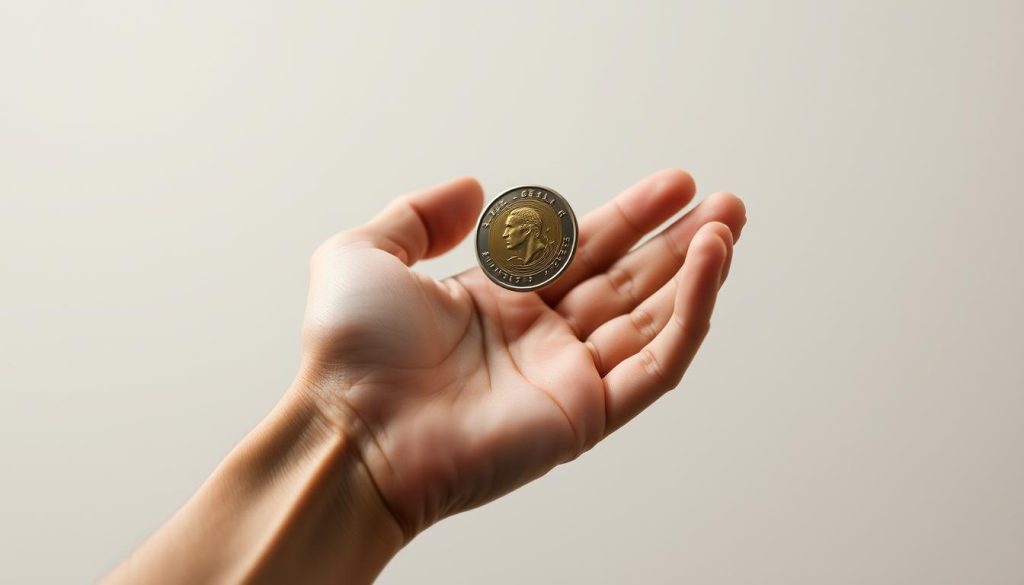
Proper Hand Positioning
To flip a coin, first hold it right. Place the coin on your thumb, balanced between your thumb and index finger. Your thumb should face up, with the coin on the tip. This grip helps control the flip.
A firm but not too tight grip is best. You need to release the coin easily, so don’t squeeze too hard.
The Thumb Flick Technique
The thumb flick propels the coin into the air. Snap your thumb up to release the coin. Aim for enough spin to keep it rotating.
Practice the thumb flick without releasing the coin first. This builds muscle memory. Once you’re comfortable, you can release the coin.
Catching vs. Letting the Coin Land
After flipping, you can catch the coin or let it fall. Catching requires good hand-eye coordination and timing. Extend your hand, palm up, to catch the coin.
Letting the coin fall adds chance, as its outcome depends on how it lands. Both methods have their charm, depending on your preference.
| Technique | Skill Level | Outcome |
|---|---|---|
| Catching | High | Controlled |
| Letting Land | Low | Random |
Mastering the coin flip technique is a fun skill to learn. Regular practice will improve your thumb flick and catching skills.
Common Mistakes and How to Avoid Them
Mastering the coin flip means knowing the common mistakes that can mess up your technique. Whether you flip for fun or as a pro trick, it’s key to dodge these errors for a perfect flip.
Inconsistent Flipping Force
One big mistake is using an uneven flipping force. This leads to unpredictable results and unprofessional-looking flips. To fix this, practice flipping with a consistent force until it’s natural. Try flipping the coin many times and aim to use the same force each time.
Poor Catching Technique
A bad catching technique can spoil a great flip. To catch the coin right, keep your catching hand steady and catch it flat. Trying out different catching methods can help you find what works best for you.
Predictable Patterns to Avoid

Another mistake is falling into patterns that are easy to guess. This makes your flips less exciting. To keep your flips engaging, mix up your technique by changing the force, spin, or direction. Here are some tips to avoid predictability:
- Vary the height of your flips
- Change the spin of the coin
- Use different coins or flipping surfaces
By knowing these common mistakes and practicing to avoid them, you can greatly improve your coin flipping skills.
Advanced Coin Flipping Techniques
Advanced coin flipping techniques can make this simple activity more exciting. Once you get the hang of the basics, you can try more complex methods. This will improve your skills and wow your viewers.

The Spin-and-Flip Method
The spin-and-flip method makes the coin spin a lot and flip several times in the air. To do this, you need to flick your thumb with more force and release the coin at the right angle. It takes practice to get good at this.
One-Handed Catch Techniques
Catching a coin with one hand is all about precision and timing. To catch it, keep your hand relaxed and let the coin land on the back of your hand. With practice, you’ll catch it every time.
Impressive Trick Flips to Master
Trick flips can make your coin flipping shows more exciting. Two cool tricks to learn are the Knuckle Roll and the High Toss and Behind-the-Back Catch.
The Knuckle Roll
The Knuckle Roll makes the coin roll smoothly across your knuckles. To do this trick, start by placing the coin on your middle finger and use your other fingers to guide it.
The High Toss and Behind-the-Back Catch
The High Toss and Behind-the-Back Catch is a cool trick that involves tossing the coin high and catching it behind your back. To master this, practice tossing the coin to the right height and learn to catch it without looking.
| Trick | Difficulty Level | Practice Required |
|---|---|---|
| Knuckle Roll | Medium | High |
| High Toss and Behind-the-Back Catch | High | Very High |
| Spin-and-Flip Method | Medium | High |
By mastering these advanced techniques, you’ll impress your audience and take your skills to the next level. Remember, practice is key to getting better at these tricks.
“The art of coin flipping is not just about the flip; it’s about the showmanship and skill involved.”
— Coin Flipping Expert
Mastering the Coin Flip: Putting it all Together
Now you know the basics and advanced techniques of coin flipping. It’s time to put your skills to the test. Remember, becoming good at flipping a coin takes practice. So, don’t get discouraged if you don’t get it right away.
With consistent practice, you’ll soon be able to master the coin flip. You’ll impress your friends with your skills. This guide has shown you the key to a successful coin flip.
The key is in the technique, equipment, and the environment. By following the tips in this guide, you’ll be flipping like a pro in no time. Whether you’re settling disputes or just having fun, coin flipping is enjoyable for all ages.
So, keep practicing. Soon, you’ll be a master of the coin flip. With patience and dedication, you’ll flip perfectly every time. You’ll also be able to teach others how to flip a coin like a pro.